What Are You Looking For?
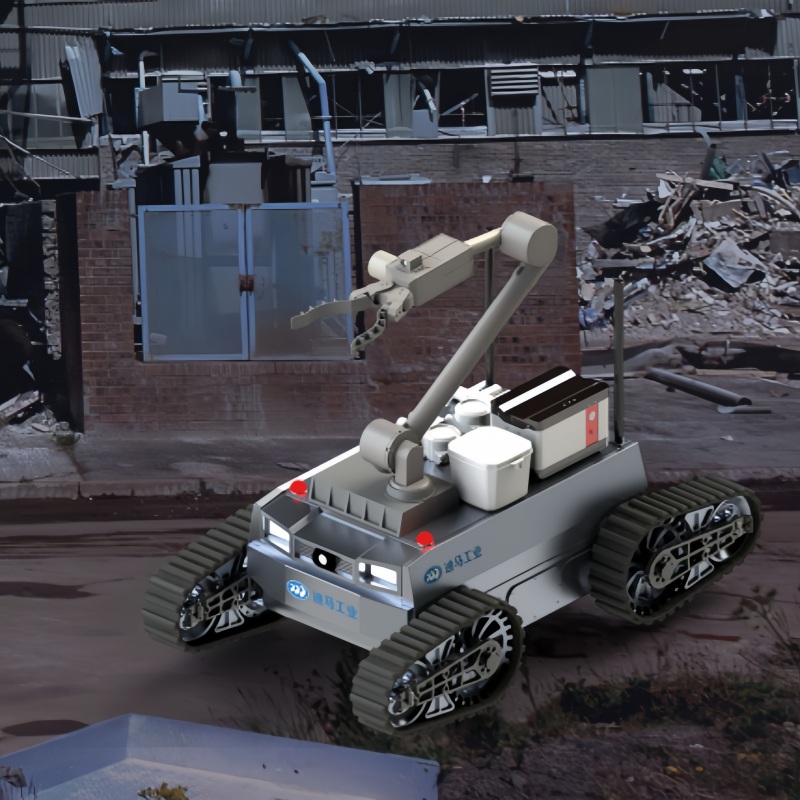
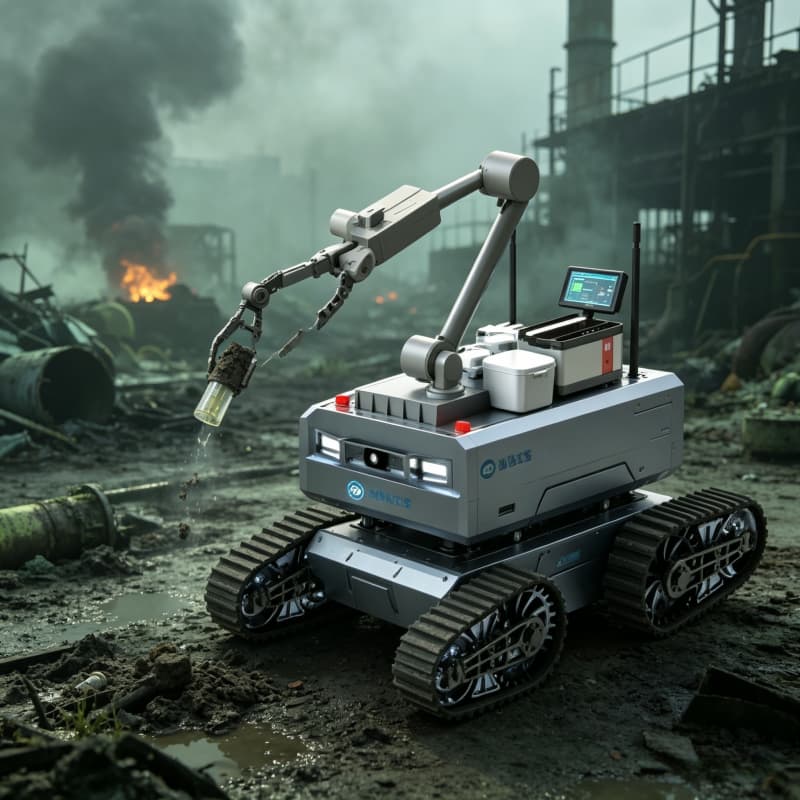
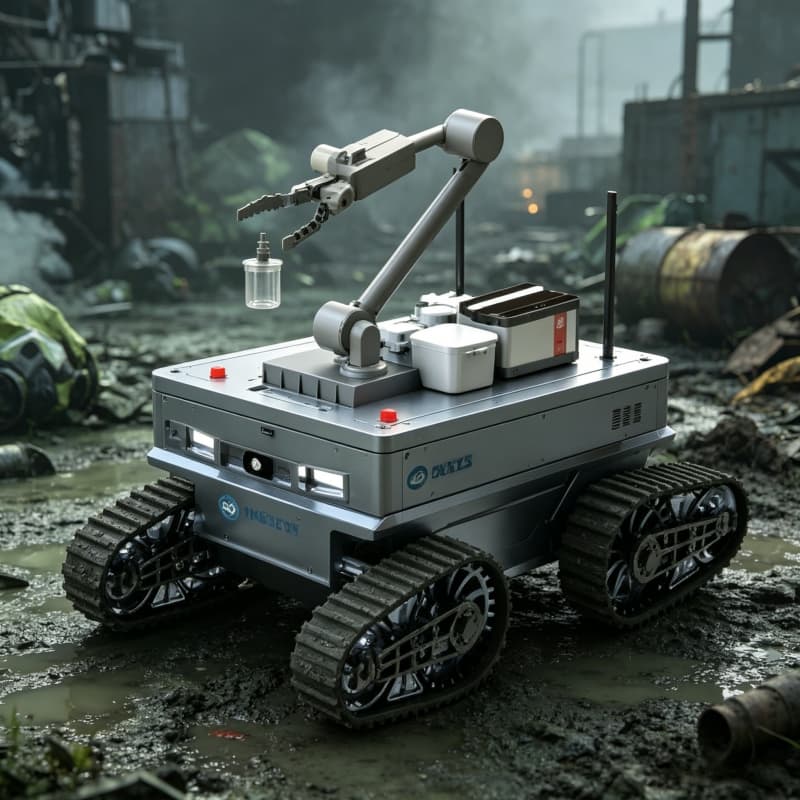
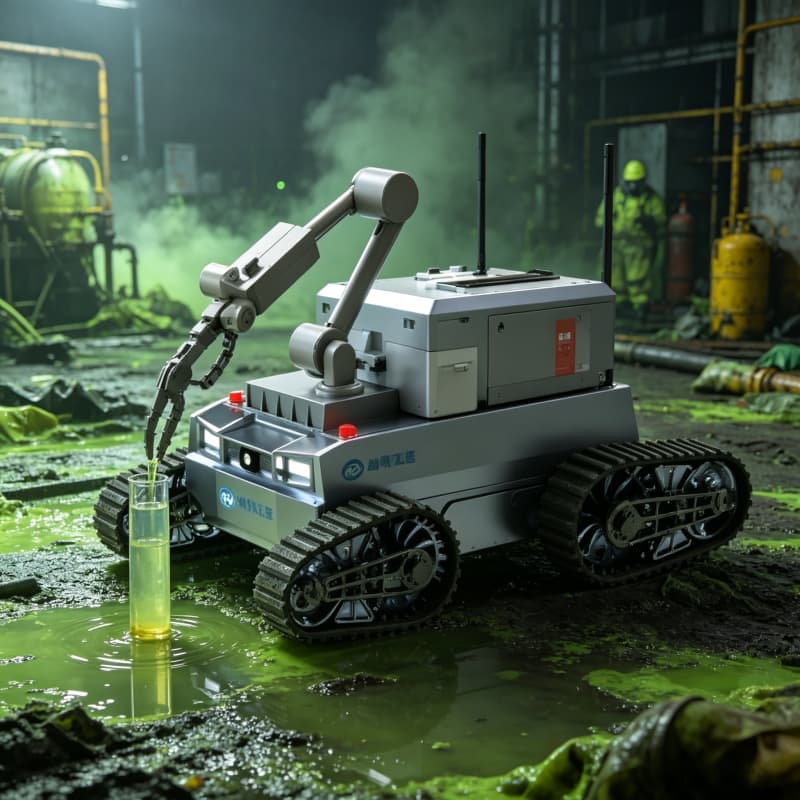
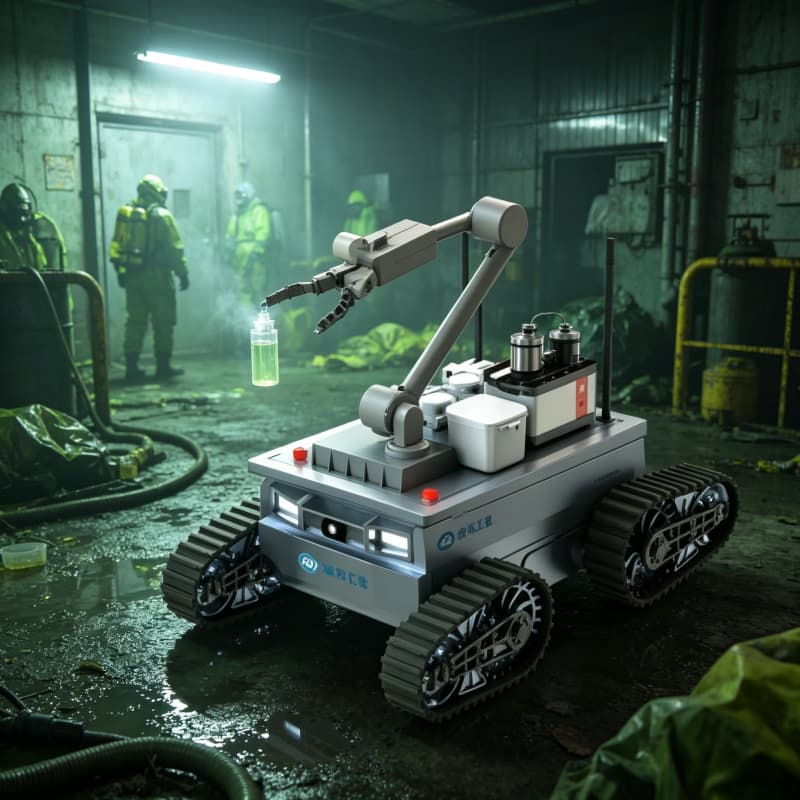
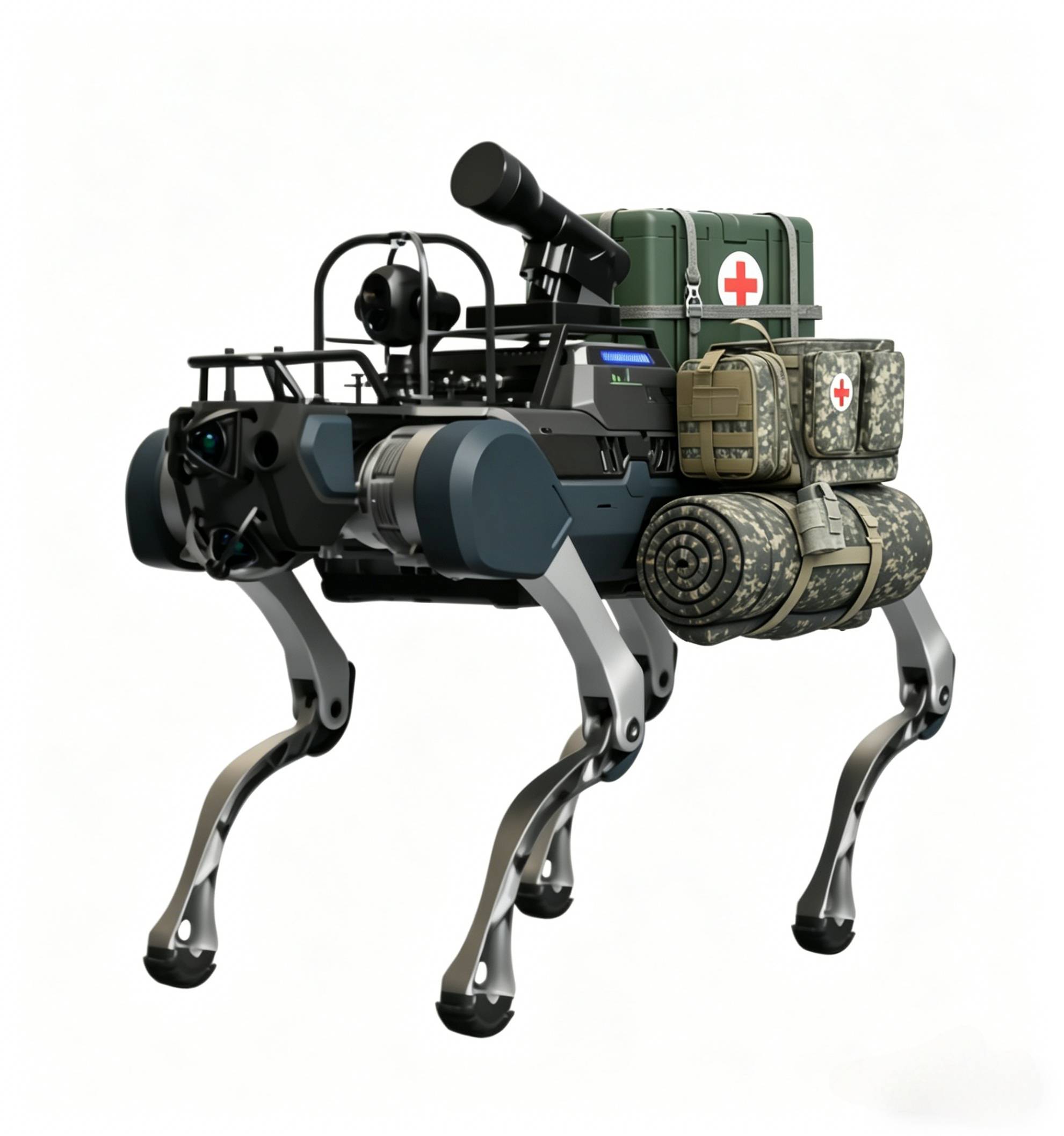
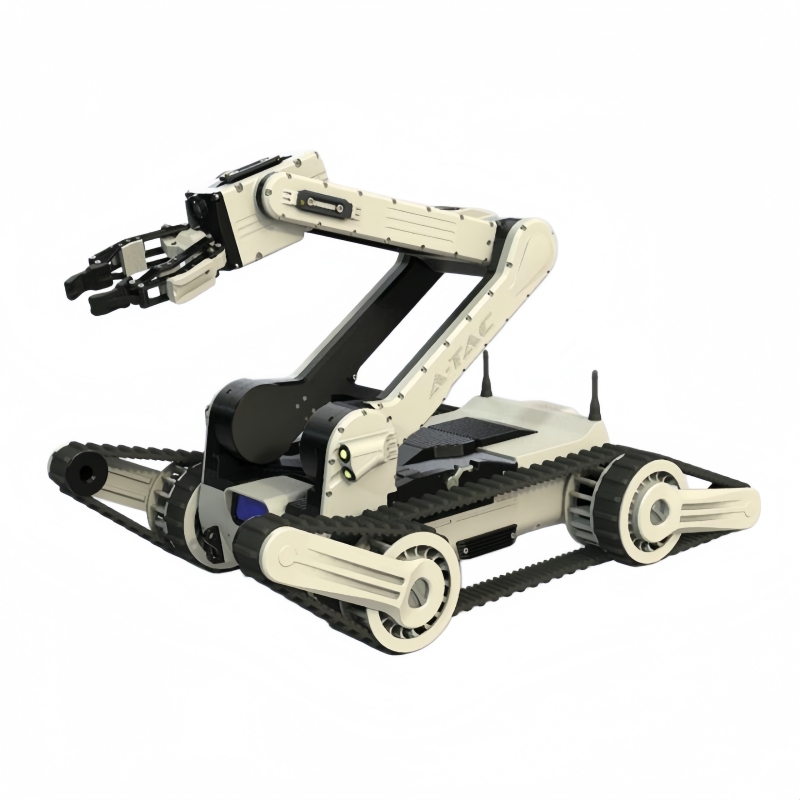
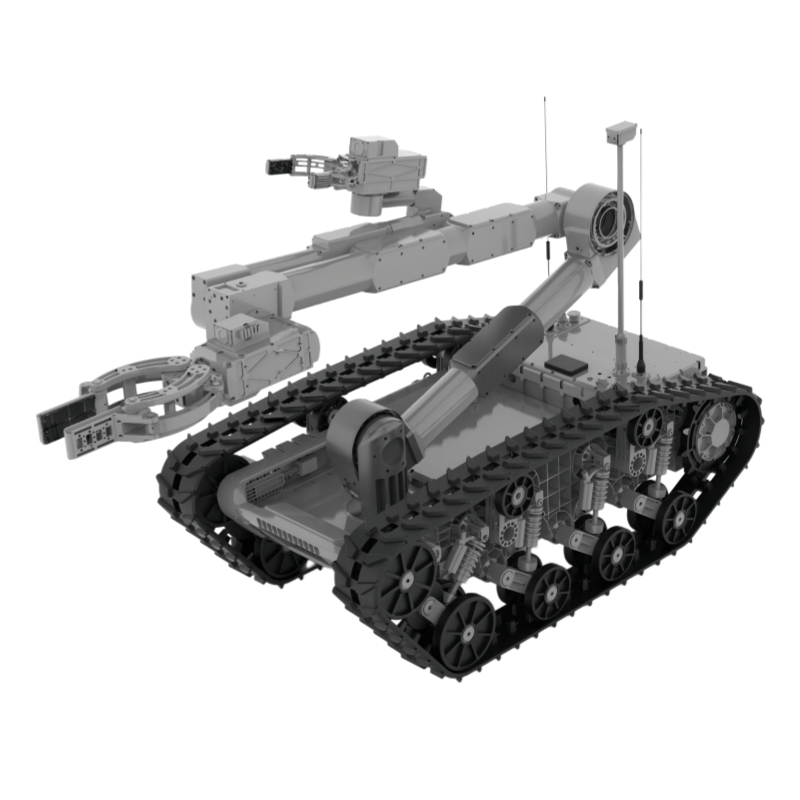
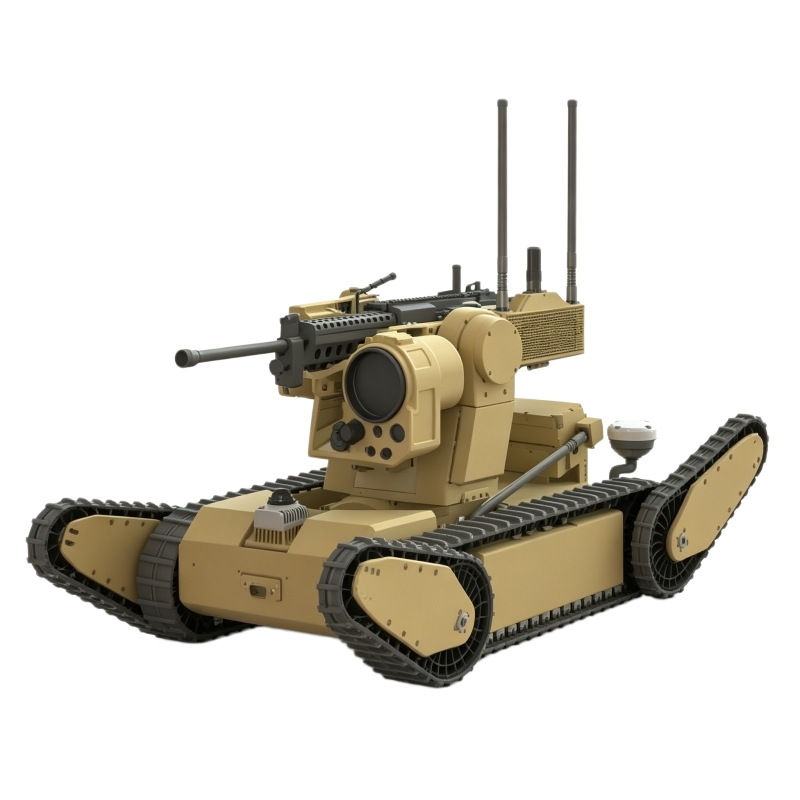
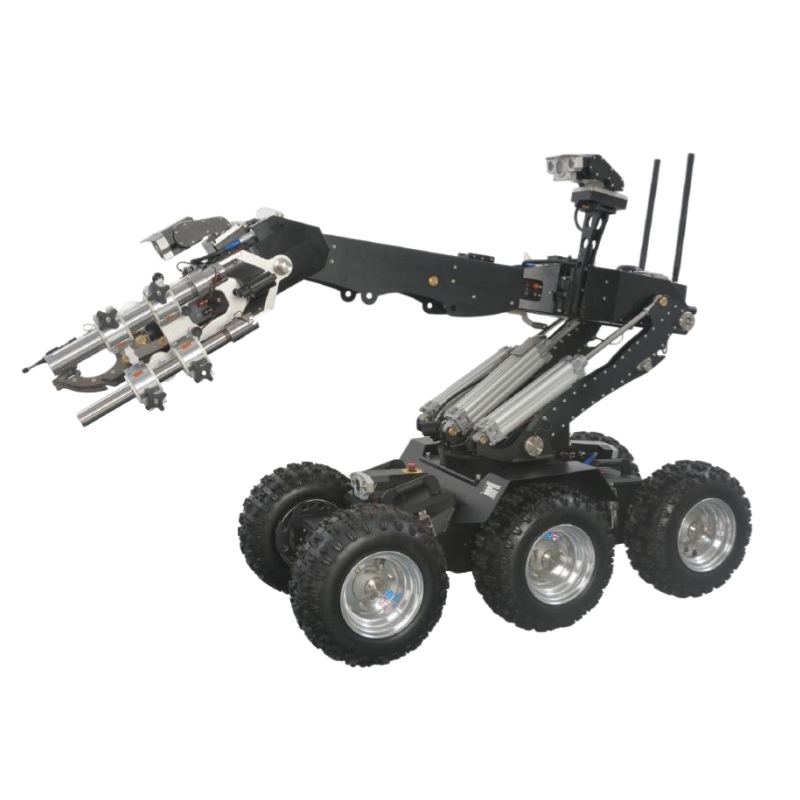
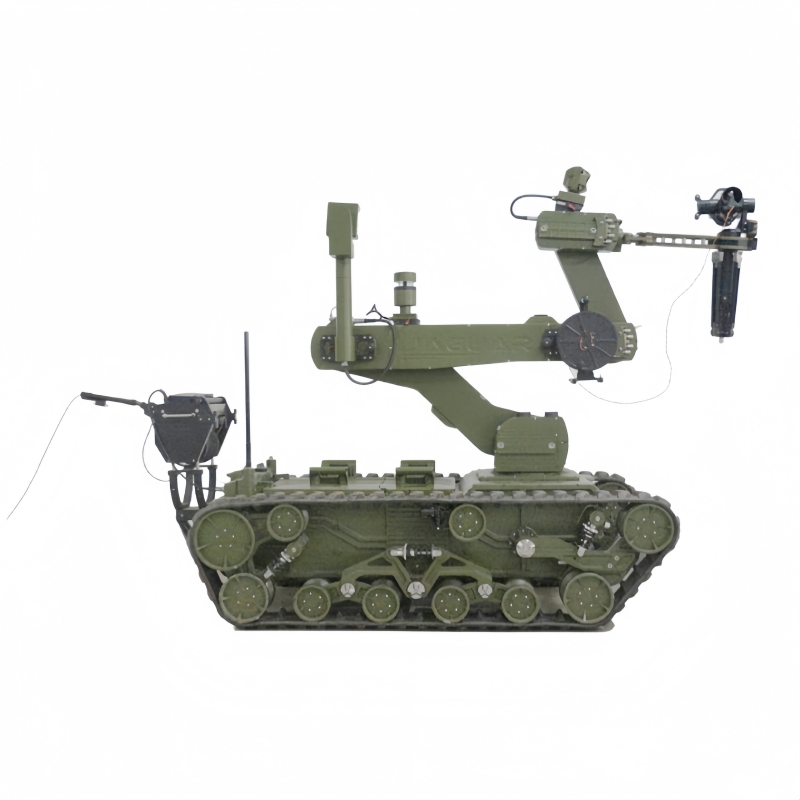
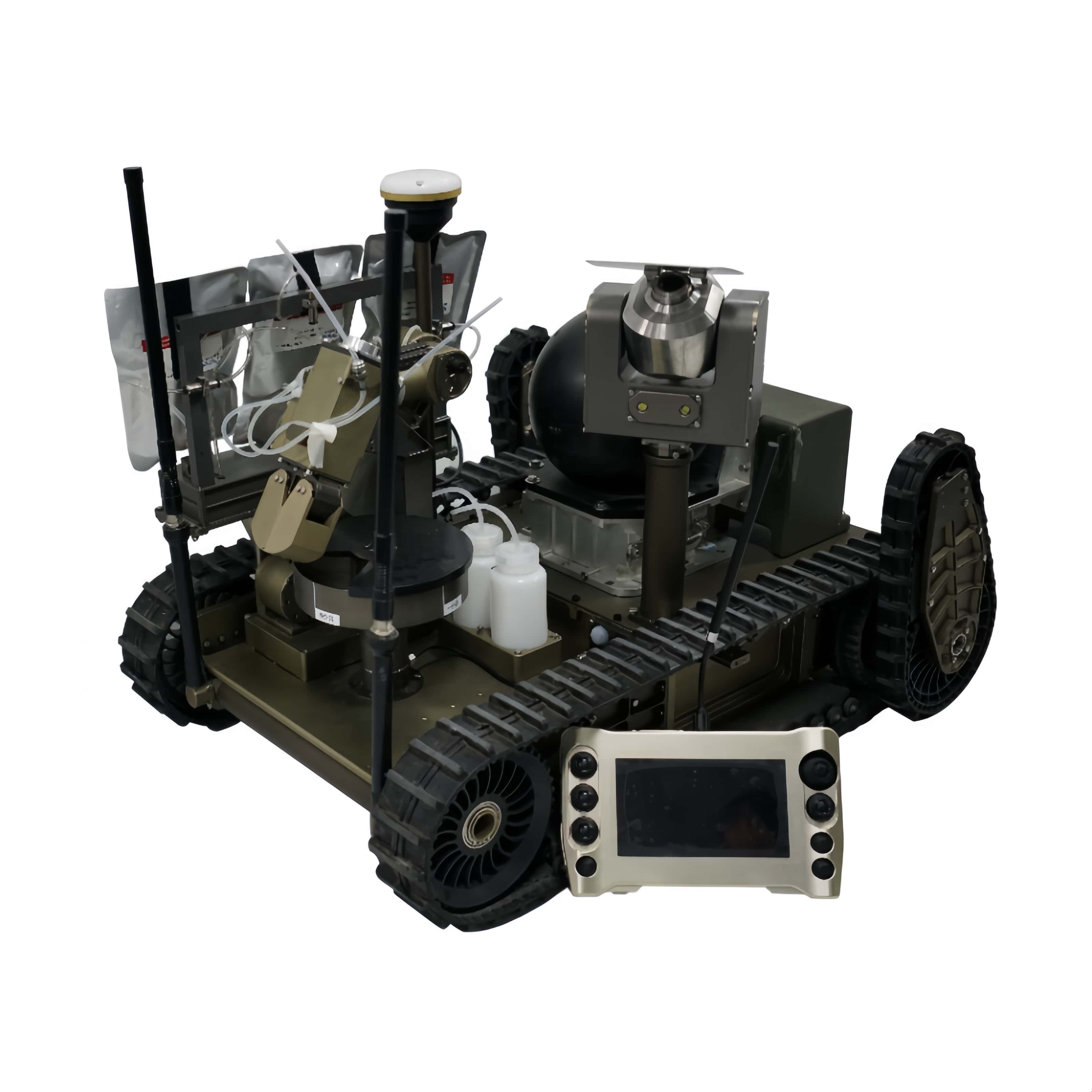
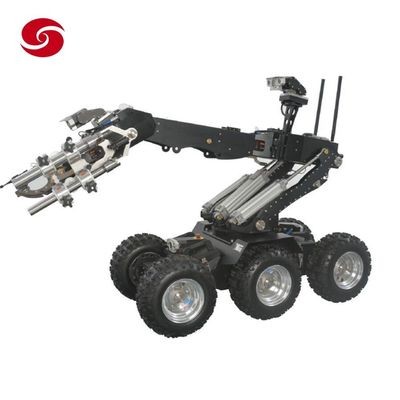
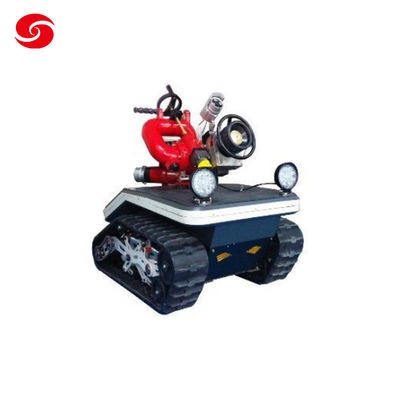
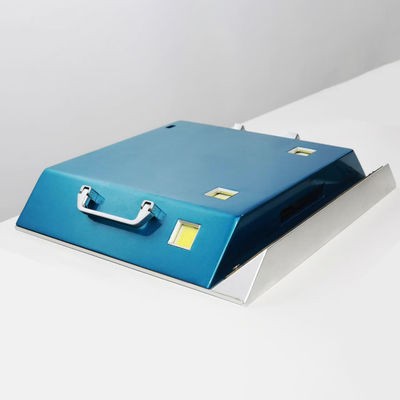
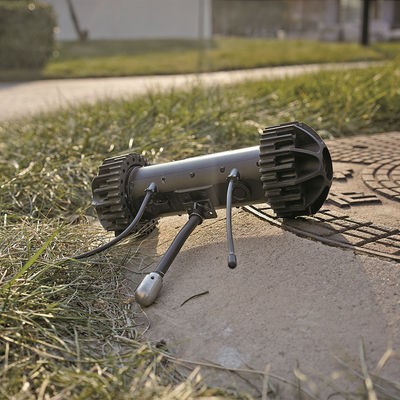
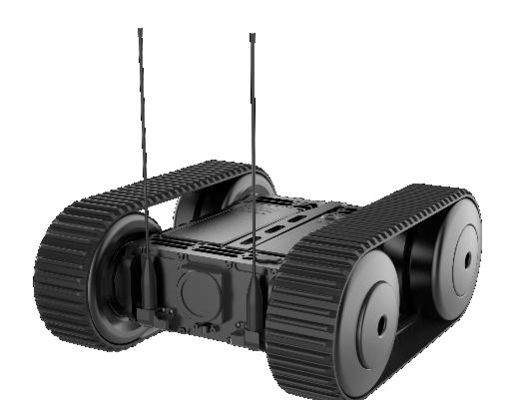
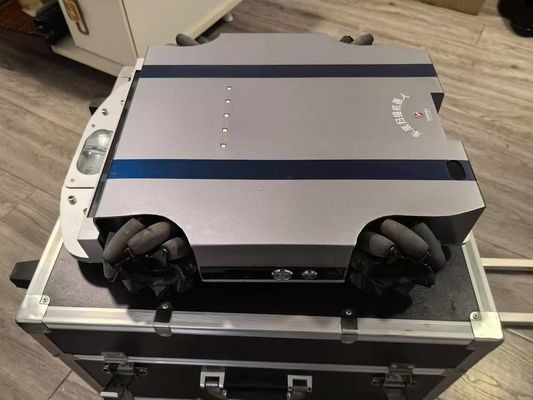
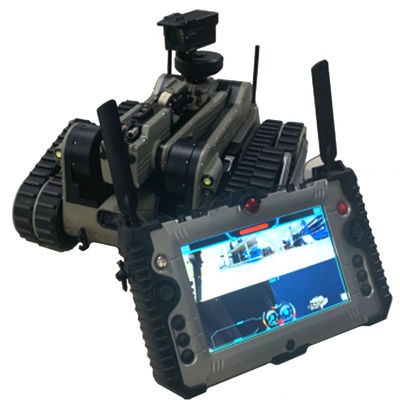
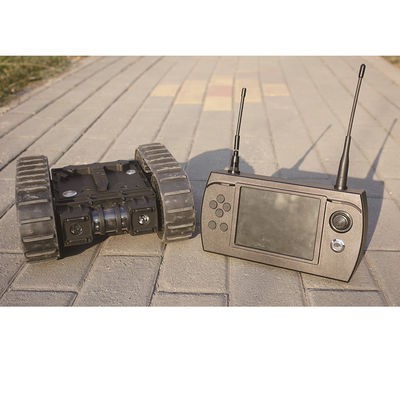
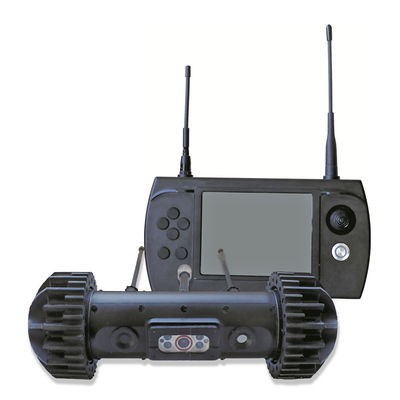
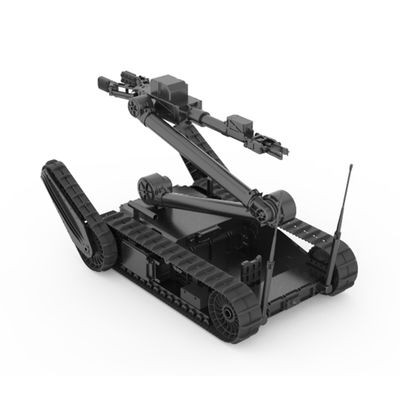
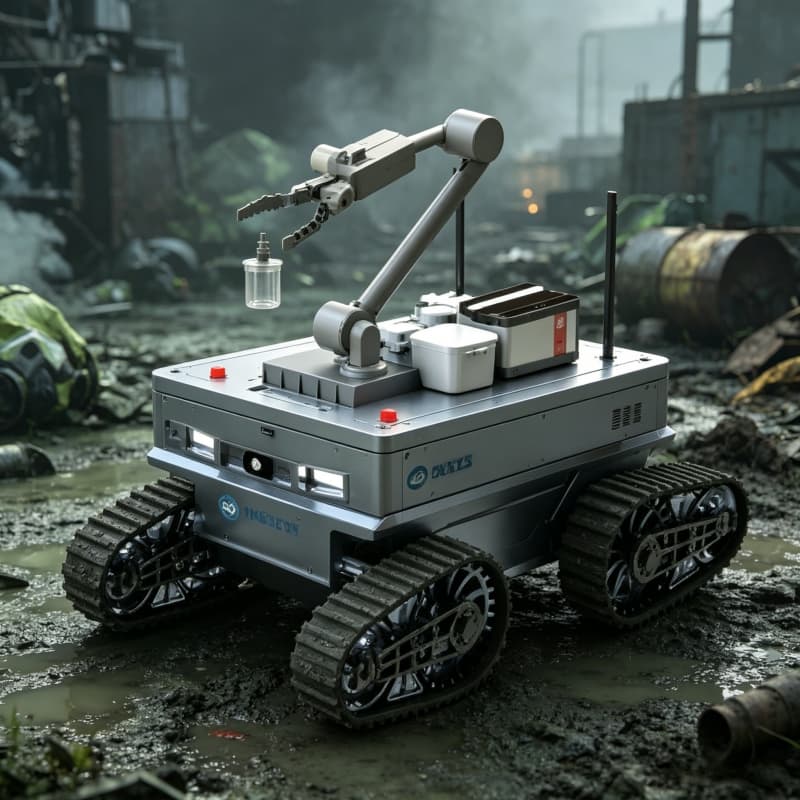
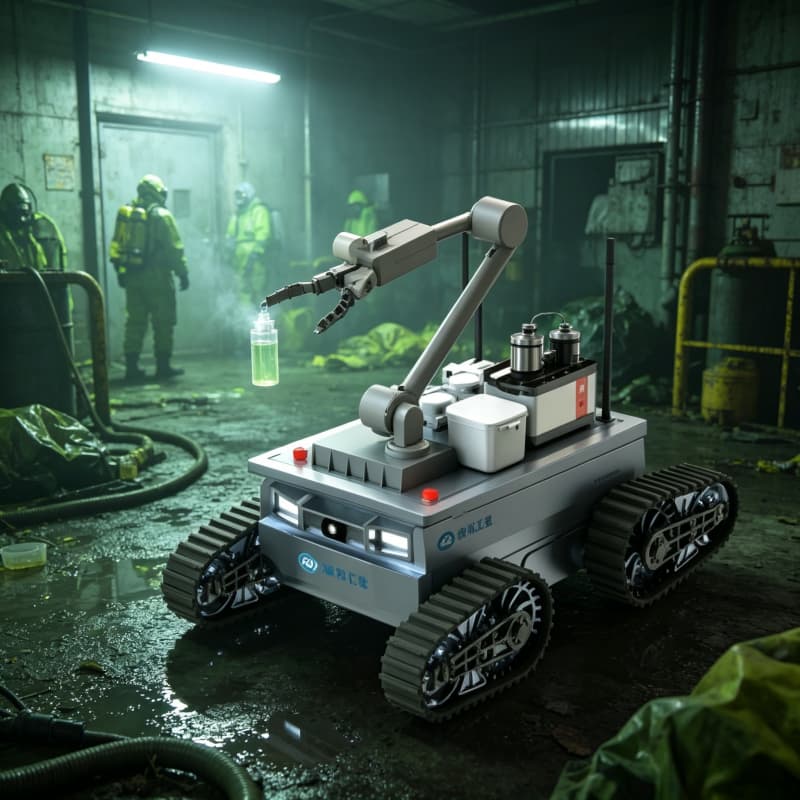
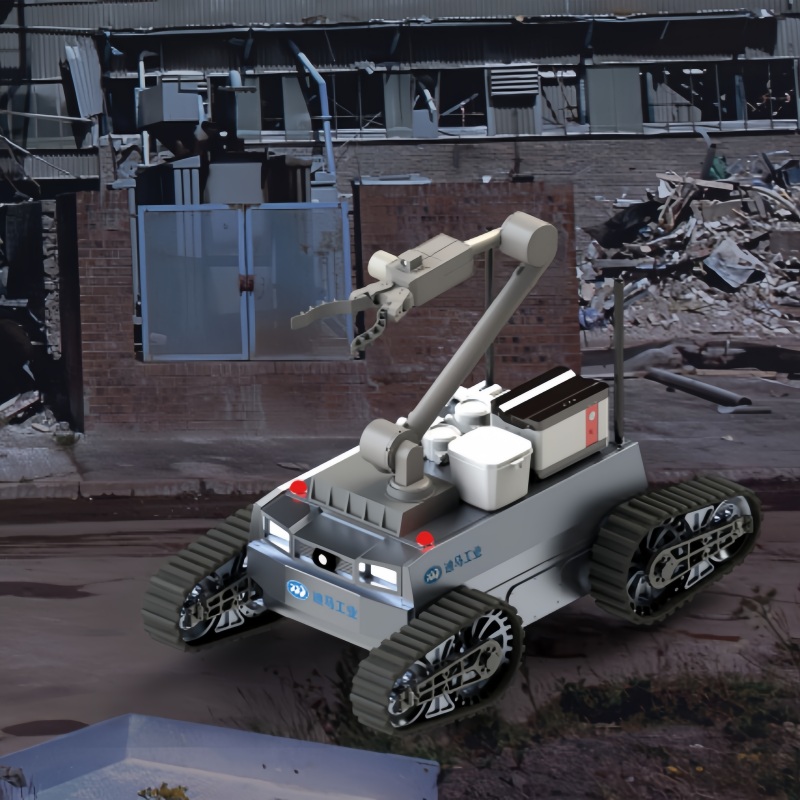
Explosion-proof CBRN robot for nuclear, biological, chemical detection and sampling. All-terrain UGV with real-time data transmission, solid/liquid/gas sample collection, and remote reconnaissance. For hazmat teams, military NBC units, and emergency responders.
Key Parametres:
Size: 1100×920×810mm | Weight: 260kg
Protection: Ex d IIB T4 Gb, IP65
Speed: 1.6m/s | Obstacle: 300mm | Slope: 45°
Wireless range: ≥1.5km | Runtime: ≥2h
Nuclear: γ 0.1μGy/h–100mGy/h
Bio alarm: ≤10s | Chem: 300+ gases
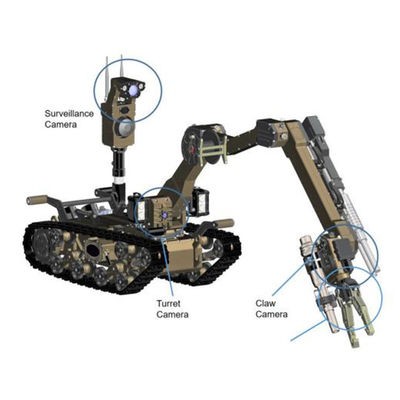
Manipulator: 6-DOF, grip 0–240mm
Explosion-Proof. Life-Saving. – Certified safe for operation in potentially explosive atmospheres. Your crew stays out. The robot goes in.
See It. Detect It. Sample It. Confirm It. – Real-time CBRN detection + solid/liquid/gas sampling + laboratory confirmation chain.
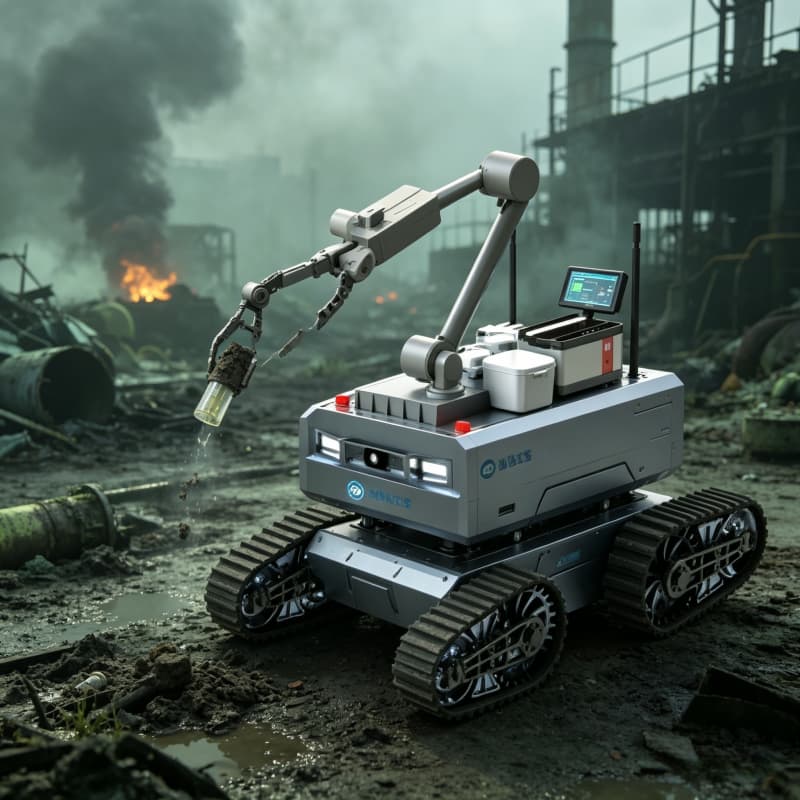
Goes Where Boots Can't – All-terrain chassis powers through rubble, mud, sand, snow, and contaminated landscapes.
Zero Personnel Exposure – Remote reconnaissance from safe distance. The robot takes the radiation. The robot breathes the chemicals. Not your team.
Real-Time Intelligence to Command – Instant sensor data streaming – radiation levels, agent identification, hazard mapping.
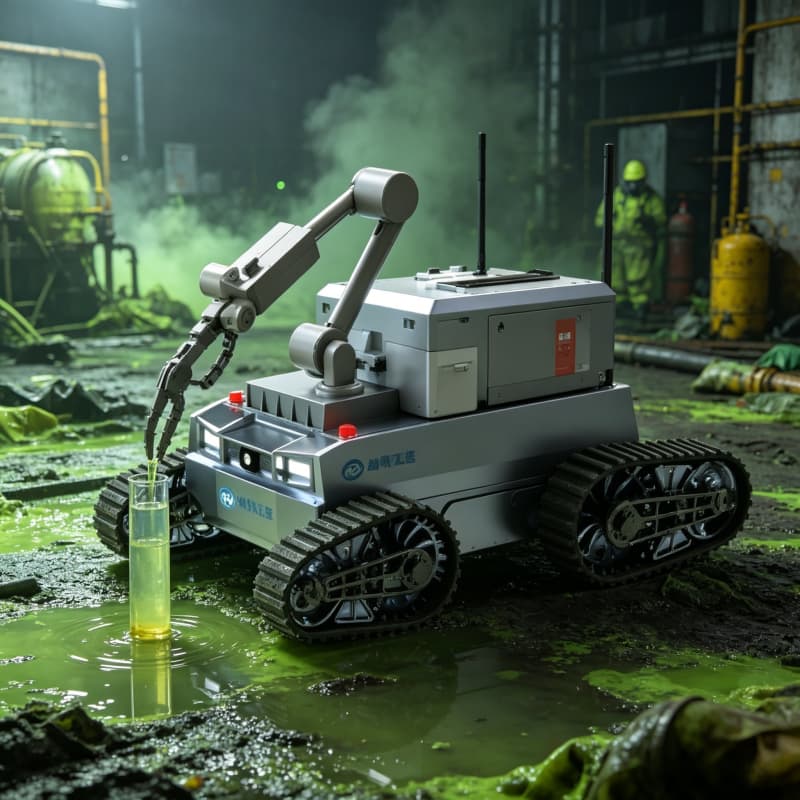
Three Sample Types. One Robot. – Solid (soil, debris, powder). Liquid (water, chemical spills). Gas (airborne agents, vapors).
NBC Ready – Nuclear radiation detection. Biological agent identification. Chemical warfare agent sensing.
From Incident to Analysis – On-site detection guides emergency response. Collected samples confirm in lab.
Ideal for :
✔ Hazmat emergency response teams
✔ Military NBC reconnaissance units
✔ Civil defense and public safety
✔ Industrial fire departments
✔ Nuclear facility inspectors
✔ Environmental protection agencies
✔ Counter-terrorism CBRN units
Answer: The robot is designed with intrinsically safe components and sealed enclosures to prevent any internal spark or heat from igniting the external atmosphere. It is rated for operation in potentially explosive environments such as chemical plants, oil refineries, gas stations, or areas contaminated with flammable gases, vapors, or dust.
Answer: It is equipped to detect and monitor Chemical agents (toxic industrial chemicals, nerve agents), Biological hazards (bacteria, spores, toxins), Radiological/nuclear materials (gamma radiation, alpha/beta particles), and Explosive threats. Specific sensors can be configured based on your mission profile.
Answer: Yes. The robot is equipped with a multi-mode sampling system:
Gas: Integrated pump with filter/adsorbent tube for airborne or point-source gas/vapor collection.
Liquid: Peristaltic or syringe pump for water, spills, or pooled chemicals.
Solid/Granular: Robotic arm with gripper or scoop for soil, powder, debris, or swab samples.
All samples are stored in sealed, compartmentalized containers to prevent cross-contamination.
Answer: The robot uses a dual redundant data link (typically 4G/LTE + military-grade encrypted radio). It can transmit live HD video (day/thermal), gas concentrations, radiation levels, GPS coordinates, and sampling status to a remote command post up to 1-5 km line-of-sight (or further with relay). In obstructed environments (basements, dense structures), a tactical deployable repeater can be used.
Answer: The tracked chassis is designed for mud, sand, gravel, snow, stairs (up to 45° incline), rubble, and uneven industrial surfaces. It can traverse gaps, climb over obstacles, and operate in confined spaces such as pipes, tunnels, or collapsed buildings. Optional flotation tracks are available for marsh or shallow water.
Answer: The robot features a smooth, sealed exterior with no crevices that trap contaminants. It is compatible with standard military/industrial decontamination solutions (e.g., bleach, foams, or chemical neutralizers). Critical sensors and sample inlets have protective caps for pre- and post-mission sealing. We provide a detailed Decontamination Protocol Guide with purchase.
Answer: Absolutely. This is the robot’s primary purpose. The operator controls it from a safe distance (up to 1 km or more) via a ruggedized remote control unit or laptop ground station. The robot carries its own power, sensors, and sampling gear – no tether is required (though optional fiber optic tether is available for absolute signal security). Zero operator exposure to CBRN or explosive hazards.
Answer: Typical scenarios include:
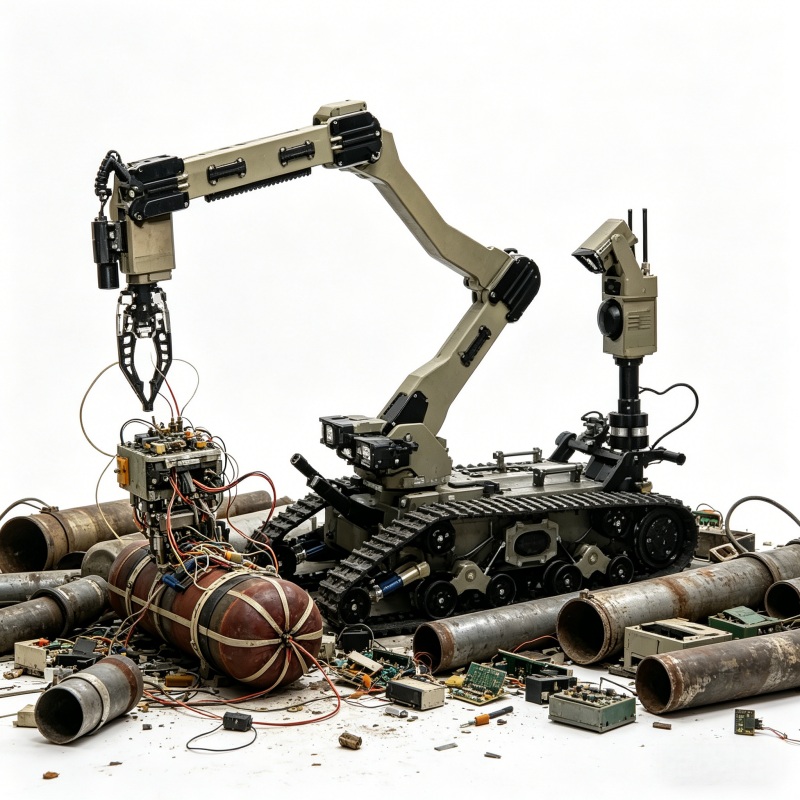
Suicide bomber post-blast analysis (collecting explosive residue without entering the kill zone)
Chemical plant leak (identifying the gas/liquid and taking samples from the danger zone)
Suspicious package (CBRN assessment in a subway or airport)
Nuclear incident (radiation mapping and solid swipe sampling)
Hazmat train derailment (identifying multiple leaking chemicals)
Pandemic response (collecting biological swabs from high-risk areas)
Answer: It uses hot-swappable, intrinsically safe lithium-ion battery packs. Typical runtime is 2-4 hours of continuous driving/sampling (depending on terrain and sensor payload). Batteries can be changed in under 1 minute in a safe area, allowing extended missions.
Answer: Yes. We provide a standard 2-day on-site or virtual training for operators and maintenance personnel, covering:
Robot assembly, operation, and troubleshooting
CBRN sensor calibration and interpretation
Sample collection, sealing, and chain-of-custody procedures
Post-mission decontamination and battery safety
Certification of completion is issued to each trained operator.
Tags :